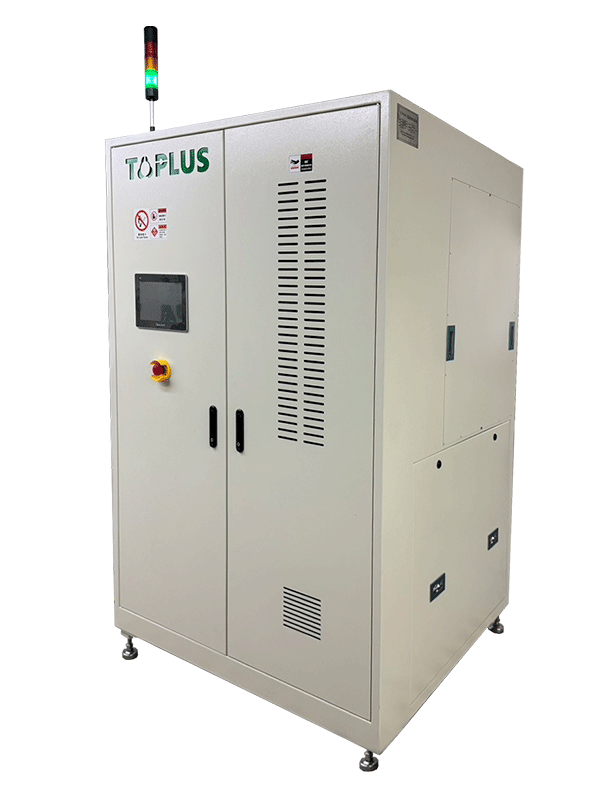
Toplus’ PCAP Porous Ceramic Adsorption Purifier is designed to effectively remove a wide range of impurities from hydrogen streams, enabling the production of high-purity hydrogen for advanced industrial applications.
PCAP is suitable for electronic-grade hydrogen purification in the semiconductor industry, by-product hydrogen purification in the petrochemical industry, and various industrial hydrogen purification applications.
The PCAP system consists of a large number of ceramic tubes, each approximately 1 mm in diameter, with internal microporous structures. Thanks to its low pressure-drop characteristics, PCAP can operate stably under either near-atmospheric or high-pressure conditions, depending on customer requirements.
By rapidly adsorbing impurity gas molecules, PCAP can increase hydrogen purity to above 6N, 99.9999%, meeting the stringent requirements of semiconductor processes. The overall hydrogen recovery rate can reach up to 95%.

With its modular design, PCAP can be flexibly configured with dedicated adsorption materials according to different gas compositions and impurity characteristics. It can precisely remove various contaminants, including H₂O, O₂, low-concentration N₂, CO₂, H₂S, NH₃, VOCs, and other impurities.
As advanced manufacturing processes continue to impose stricter gas purity requirements, PCAP can also be customized for challenging purification needs, such as the removal of inert gases including Argon, or for applications such as helium purification. This makes PCAP a highly flexible and scalable gas purification solution tailored to customer process conditions.
Performance Test:
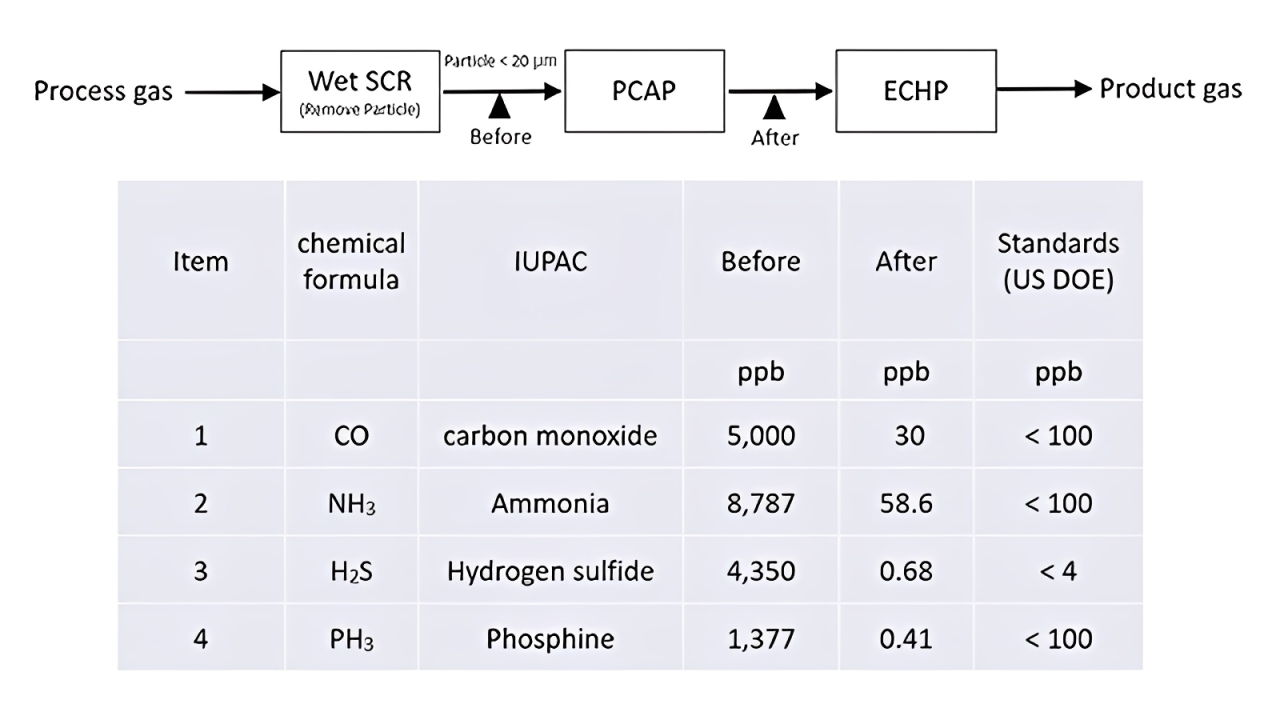
In an actual commercial case, PCAP and ECHP technologies were introduced together as an integrated hydrogen purification solution.
The performance results show that PCAP can effectively reduce multiple impurities, including carbon monoxide, CO, ammonia, NH₃, hydrogen sulfide, H₂S, and phosphine, PH₃, from the ppm level to the ppb level.
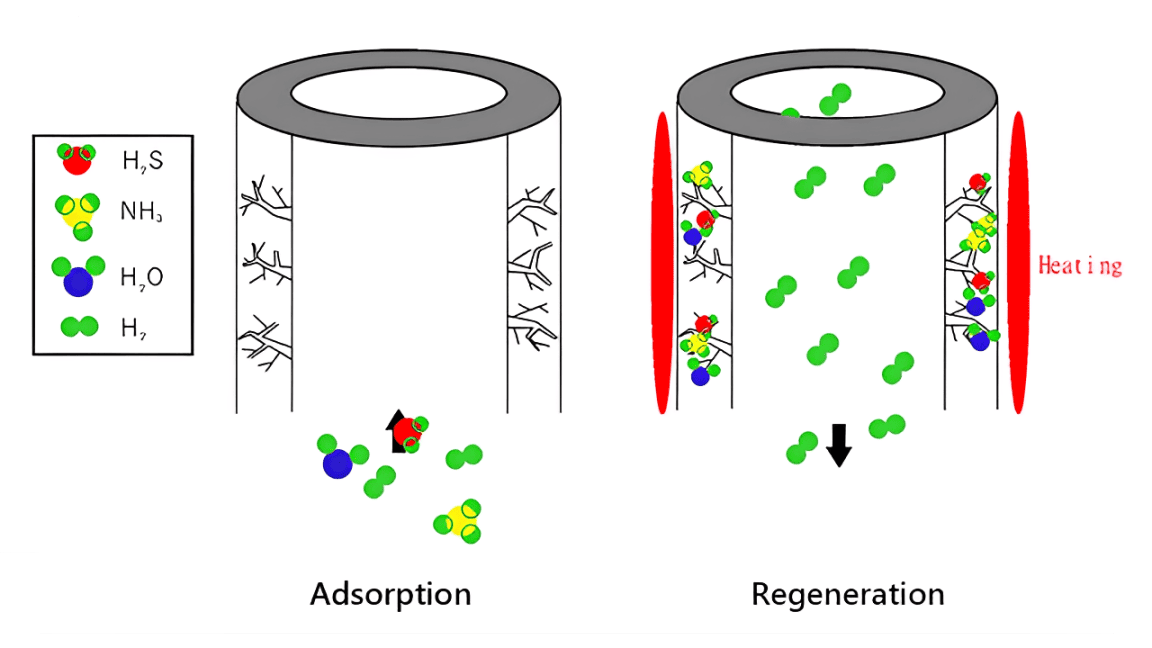
PCAP uses a large number of 1 mm porous ceramic tubes.
These tubes rapidly adsorb various impurity molecules while allowing hydrogen to pass through.
Adsorption and regeneration are carried out simultaneously, ensuring continuous system operation without interruption.