Hydrogen is widely used as a protective gas in various industrial processes, including metal heat treatment, surface coating, and semiconductor manufacturing. However, in most application scenarios, only a very small portion of the supplied hydrogen is actually consumed. Most of the hydrogen is mixed with nitrogen and discharged together with process gas, resulting in resource waste and cost loss.
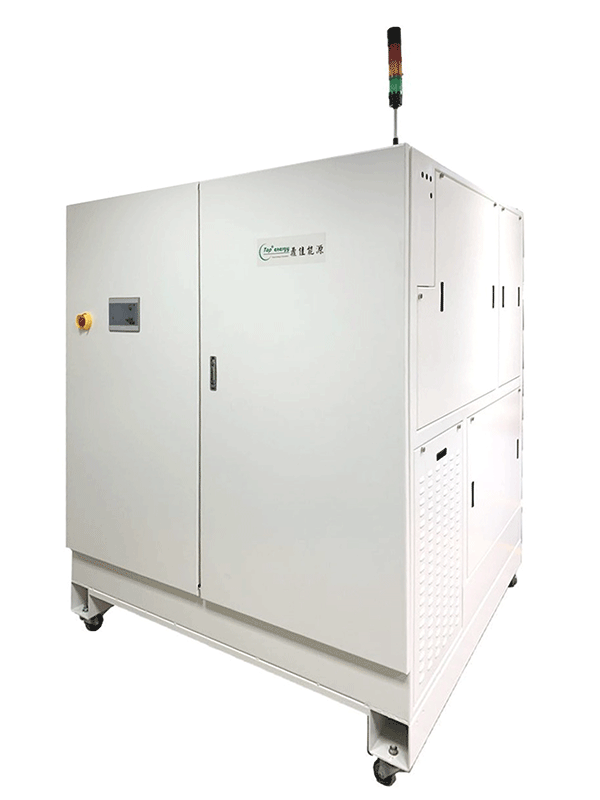
Toplus’ ECHP Electrochemical Hydrogen Purifier is specifically designed to recycle this type of discharged hydrogen. It efficiently separates hydrogen from mixed nitrogen gas streams and purifies it to high purity for reuse, significantly improving gas utilization efficiency while reducing operating costs.
Built on Toplus’ strong technical foundation in electrochemical reactor design and system integration, ECHP is developed to meet demanding on-site requirements. The system can operate stably under near-atmospheric pressure and low-temperature conditions. Through a highly selective separation mechanism, it removes nitrogen while producing high-purity hydrogen and maintaining safe operation.

ECHP has obtained SEMI S2 certification, meeting semiconductor industry standards for performance, reliability, and safety. It is an ideal purification solution for recycling and reusing hydrogen from hydrogen-nitrogen mixed gas streams.
Performance Test:
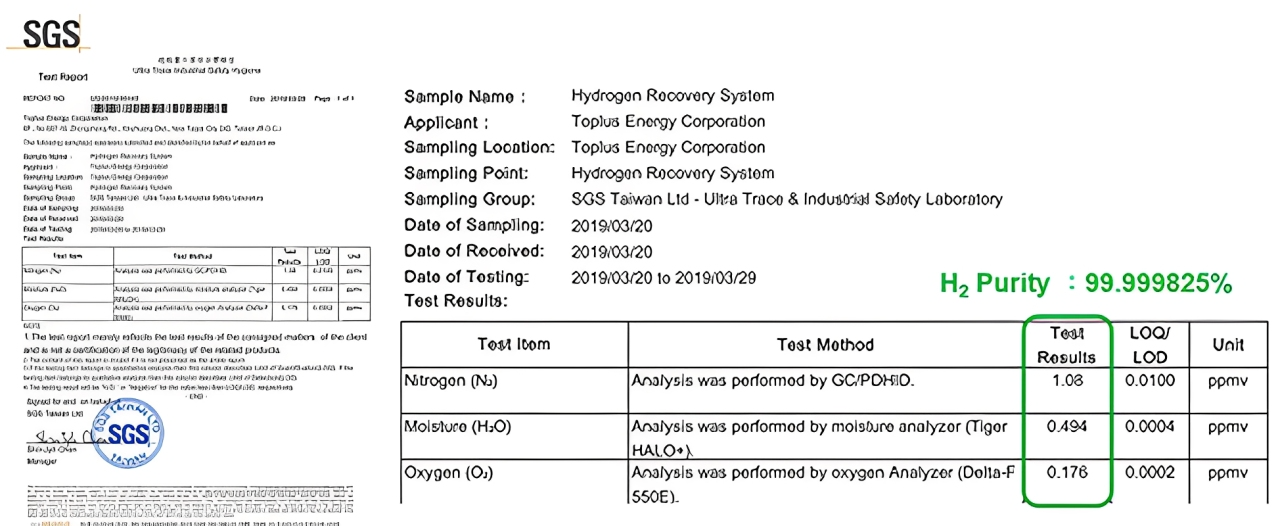
A mixed gas containing 34% nitrogen and 66% hydrogen was introduced into Toplus’ ECHP system for separation. After nitrogen removal, the saturated wet hydrogen produced by ECHP was further processed through Toplus’ PCAP system for additional water and oxygen removal.
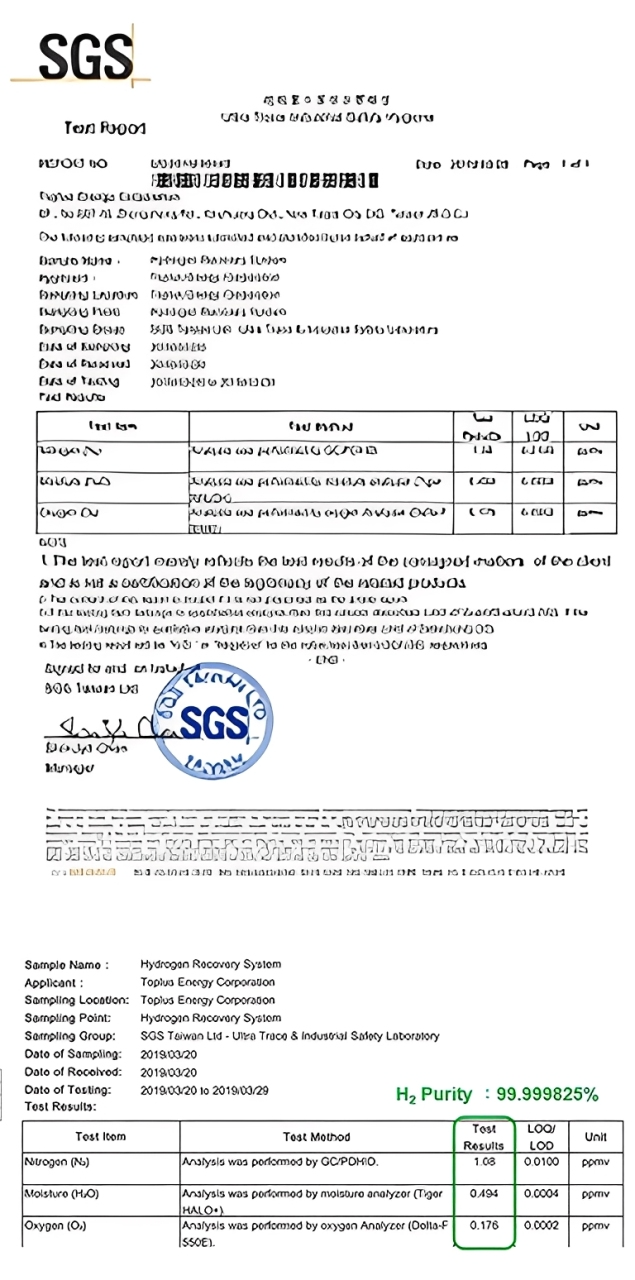
According to the SGS test report, nitrogen concentration was reduced to approximately 1 ppmv, and the final hydrogen purity reached 5N, 99.999%, demonstrating the high-efficiency separation and purification capability of the integrated system.
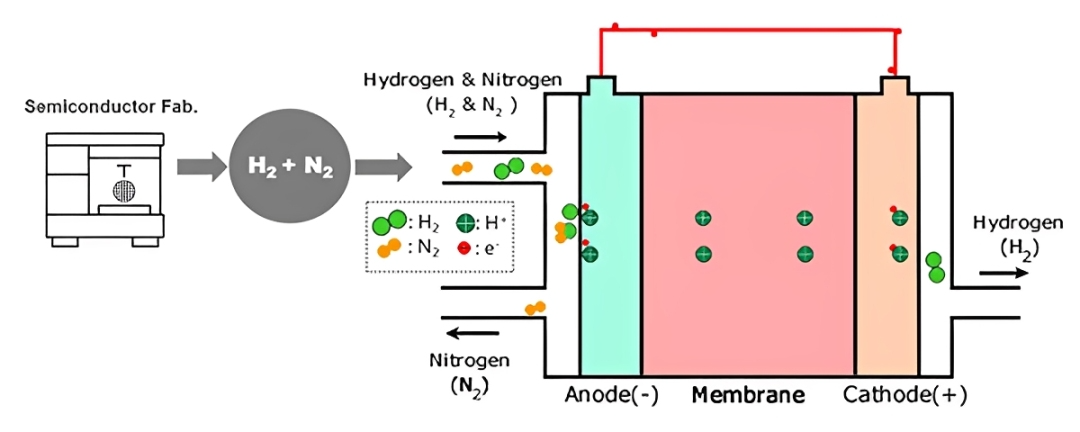
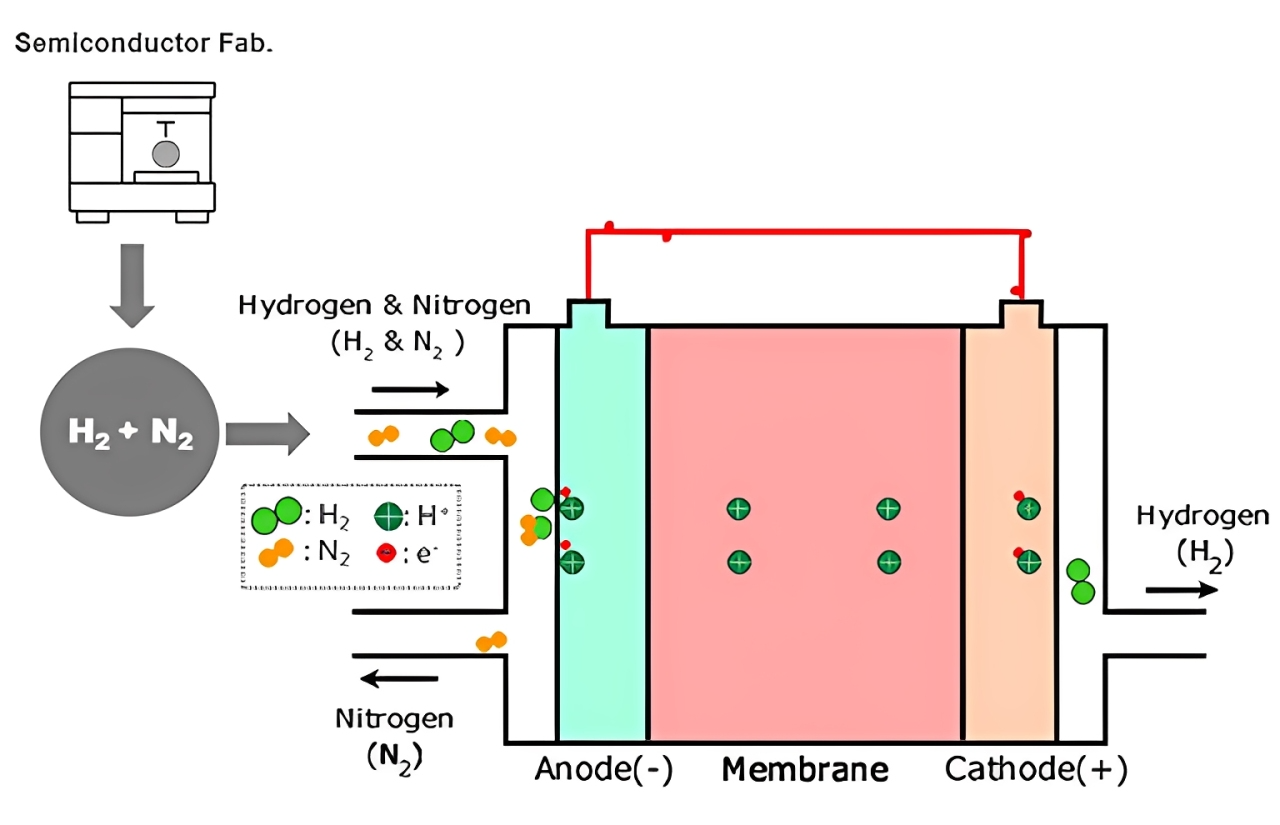
ECHP operates based on electrochemical separation technology.
When a hydrogen-nitrogen mixed gas enters the ECHP reactor, only hydrogen participates in the catalytic reaction at the anode. Hydrogen molecules are dissociated into positively charged hydrogen ions, H⁺, and electrons, e⁻. The hydrogen ions pass through the proton exchange membrane, PEM, to the cathode side, while the electrons are transferred to the cathode through an external circuit. At the cathode, hydrogen ions and electrons recombine to form high-purity hydrogen, which is then discharged as the product gas. Nitrogen, on the other hand, does not participate in the reaction and cannot pass through the proton exchange membrane. It remains on the anode side and is discharged with the separated gas stream, achieving efficient gas separation.
This technology is especially suitable for semiconductor EUV process applications, where exhaust gas typically contains a high proportion of nitrogen. ECHP can effectively recycle hydrogen from these gas streams and improve overall hydrogen utilization efficiency.