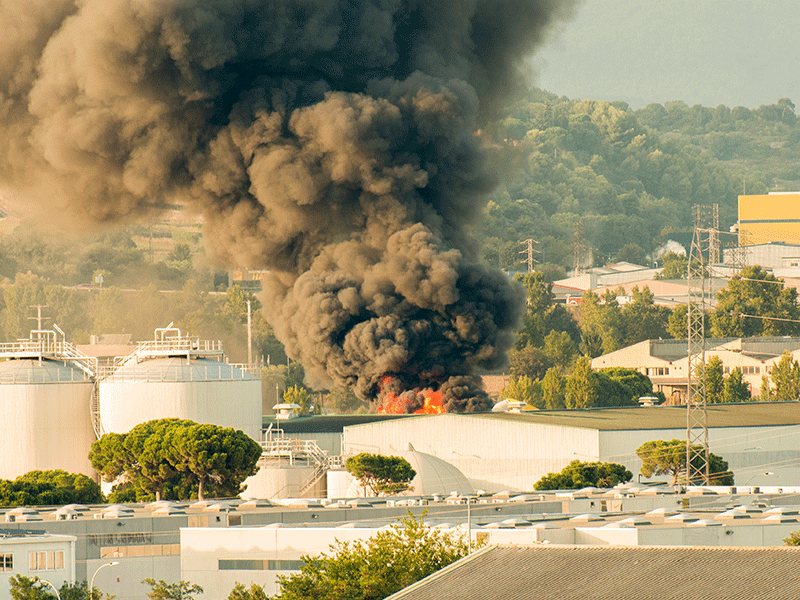
Hydrogen is highly flammable and can be ignited across a wide concentration range of 4% to 75%. It also requires extremely low ignition energy, meaning that once a hydrogen leak occurs, it may create a potential explosion risk.
Due to the extremely small size of hydrogen molecules, hydrogen can easily leak through pipe fittings, joints, and connection points. It may also cause material embrittlement, further increasing industrial safety risks.
In many hydrogen leakage incidents, the issue is not the absence of safety systems. The real risk lies in the possibility that existing safety mechanisms may fail at critical moments. Traditional hydrogen safety designs mainly rely on hydrogen detectors, ventilation, and exhaust systems. However, these mechanisms are essentially passive protection measures. They do not truly eliminate hydrogen, and therefore risks may still remain.
Solutions
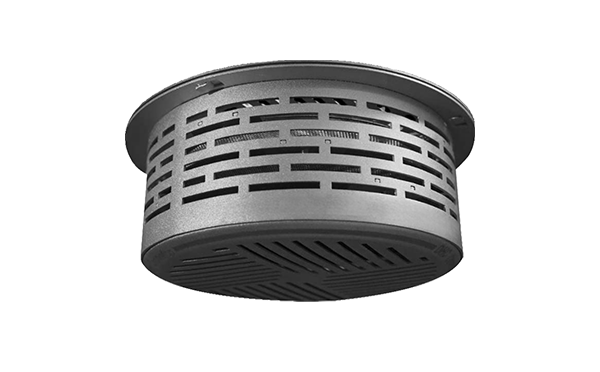
Toplus’ DHC Convection-Type Hydrogen Leak Eliminator redefines hydrogen safety. • No power required • No control system or activation condition required • No operation settings required
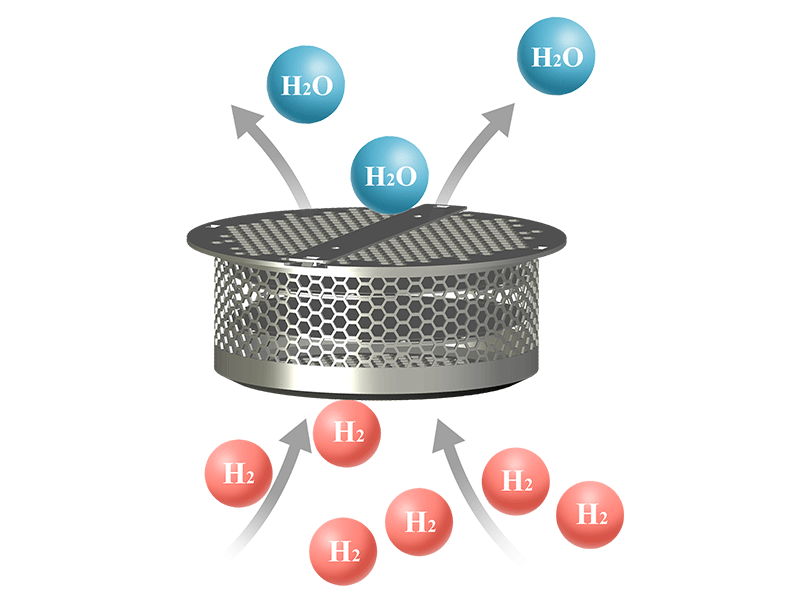
Once hydrogen leakage occurs, DHC automatically operates under room-temperature conditions. Through catalytic reaction, it continuously converts leaked hydrogen into water vapor, immediately eliminating hydrogen before it can accumulate.
DHC is not intended to replace existing safety systems. Instead, it serves as a critical reinforcement to them. Even in the event of power failure or malfunction of existing safety mechanisms, DHC can continue operating independently.
As a result, DHC serves as an indispensable final line of defense for hydrogen safety applications.